Specialty coffee is coffee that has scored at least 80 out of 100 points on the standardized SCA evaluation. In practice, it means a bean with full traceability: you know which farm it came from, how it was processed, and when it was roasted. The difference from coffee on a supermarket shelf doesn't come from better marketing or a more attractive package. It comes from decisions made at every stage, from cultivation to the cup.
You've tasted specialty coffee for the first time and something unexpected showed up in your cup: a hint of strawberry, a floral finish, an acidity that your previous coffee never had. Or you saw terms like "washed", "natural", "single origin", "lot 23" on a bag and didn't know what to make of them. The answer isn't in a secret ingredient. It's in the entire chain of the bean, from plant to extraction.
Pe scurt
- Specialty means at least 80 SCA points: an objective standard, not a marketing term.
- Traceability is the first difference from commercial coffee: you know which farm the bean came from and from which harvest.
- Processing (washed, natural, honey) determines a significant part of the flavor notes in the cup.
- Light roasting preserves the characteristics of the origin; dark roasting covers them with charcoal or intense caramel notes.
- Freshness matters: specialty coffee is at its best between 2 and 8 weeks from the roast date on the bag.
Looking for single-origin coffee for your automatic machine?
Browse all coffeesWhat the specialty score means
SCA, the Specialty Coffee Association, is the international organization that standardizes coffee quality evaluation. Certified Q-Grader evaluators cup coffee under controlled conditions and score it on ten criteria: fragrance, aroma, flavor, aftertaste, acidity, body, balance, uniformity, clean cup, and sweetness.
The minimum score for specialty coffee is 80 points. Coffees between 80 and 84 points are specialty, those between 85 and 89 are excellent, and coffees above 90 points are rare and evaluated as exceptional worldwide. Mass-market commercial coffees don't reach the 80-point threshold not because nobody scored them, but because production processes are not optimized for quality, but for volume and low cost per kilogram.
An SCA score means a professional has tasted the coffee and confirmed it meets an objective standard. It is not a self-assigned title and not the producer's opinion of their own coffee.
The same standard underlies green coffee purchases by roasters. A roaster buying specialty coffee selects lots based on a confirmed score, not just on origin or price.
boabe.ro selects only coffees with an SCA score of at least 82 points, a higher threshold than the baseline minimum, to ensure consistent quality across the entire catalogue. You can read more about our selection criteria on the about page.
How it differs from commercial coffee
Commercial coffee is produced for volume. The beans come from multiple sources, blended for lot-to-lot consistency and low cost. Defects are acceptable within a controlled proportion: black beans, fermented or damaged beans make it into the mix up to a limit percentage. Roasting is usually medium to dark, which covers quality differences between lots and produces a neutral, recognizable, consistent profile.
Specialty coffee works differently at every stage. On the farm, beans are harvested at optimal ripeness, usually by hand and selectively, cherry by cherry, not mechanically in a single pass. Processing eliminates defects before drying. Lots are small and traceable: instead of "coffee from South America," you get "lot from Huila, Colombia, La Esperanza farm, October harvest, washed process."
Traceability is not a marketing detail. It's a prerequisite for understanding why a coffee has a specific flavor and for reproducing that flavor lot after lot. When you know where the bean comes from, you also know what to expect in the cup and why it varies from one harvest to the next.
Origin: where the bean comes from
Coffee grows between the Tropic of Cancer and the Tropic of Capricorn, in a zone called the Coffee Belt. Ethiopia, Colombia, Brazil, Kenya, Guatemala, Yemen: each region adds its own characteristics to the bean, just as a wine reflects the soil and climate of its origin.
Single origin means coffee from a single source: a farm, a specific lot on a farm, or a cooperative from a defined region. A single origin has a flavor profile tied directly to its place of origin. The altitude at which the plant grows influences the density of the bean and the quantity of organic acids. The soil and microclimate of the farm add characteristics that cannot be reproduced elsewhere.
A blend combines beans from different origins to achieve a targeted and consistent profile from month to month. A balanced espresso blend typically combines a base with consistent body with an origin that adds acidity or complexity. Blends are easier to reproduce season after season and work well in brewing methods that call for regularity.
Neither option is superior to the other. Single origin gives you access to the unique characteristics of a place. A blend gives you consistency and balance regardless of season or natural variations between harvests.
Processing: where the flavor notes come from
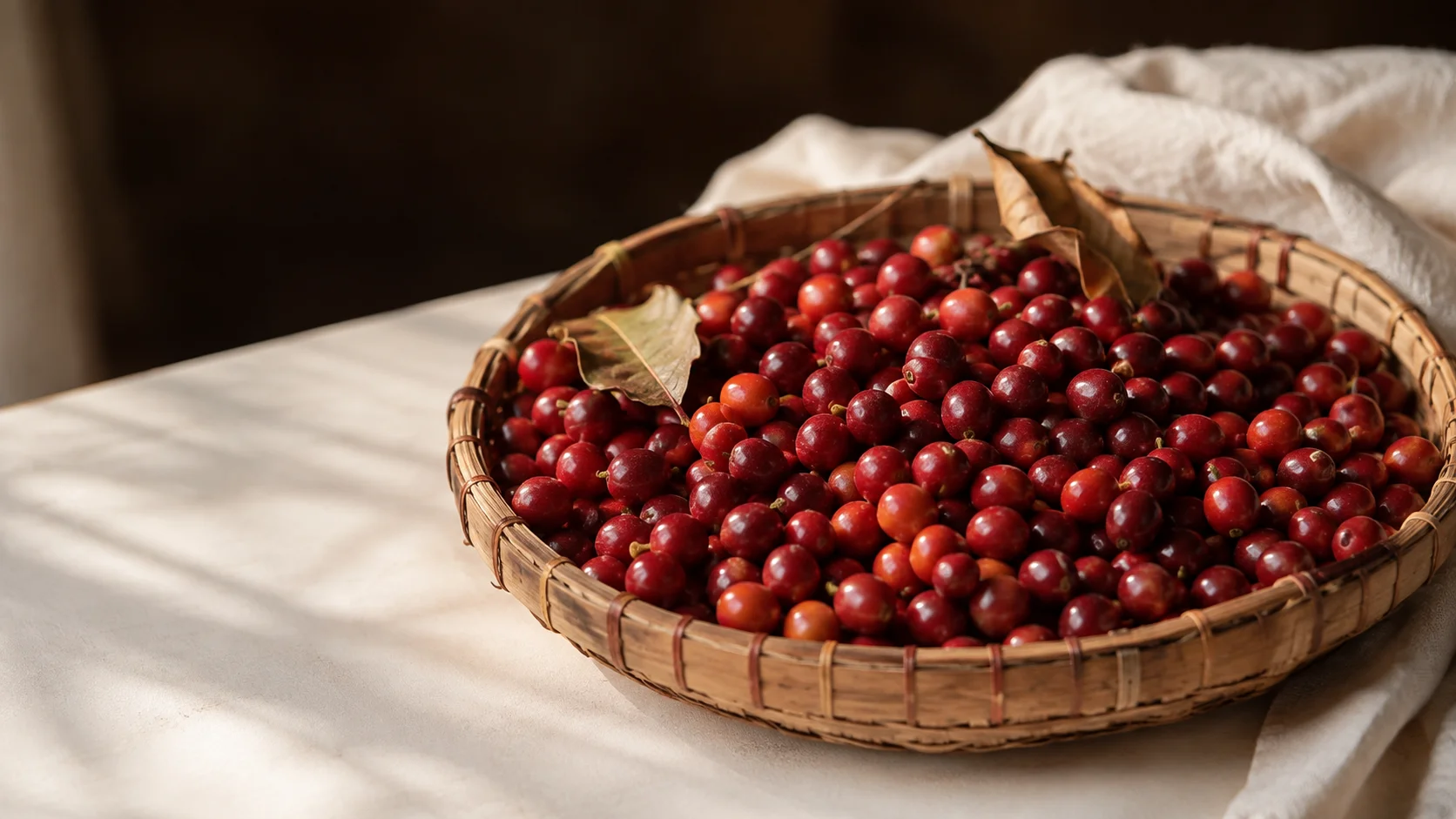
The coffee bean is the seed of the coffee fruit, called a cherry. The ripe fruit is red or yellow and about the size of a cherry. Between harvesting and drying, there are several processing methods, each with a direct effect on the flavor in the cup.
Washed processing removes the fruit before drying through fermentation and washing with water. The dried bean is clean of any pulp residue. The result in the cup is a clean flavor, with clear acidity and notes that directly reflect the origin and variety. A washed Ethiopian coffee typically has notes of bergamot, jasmine, or citrus, without the sweet influence of the fruit.
Natural processing dries the bean with the fruit intact, for 4-6 weeks on raised beds. The sugars in the fruit ferment and penetrate the bean during drying. The result in the cup is a sweeter flavor, with notes of fermented fruit: strawberries, blueberries, mango, wine notes. Natural processing produces the most fruity profiles in specialty coffee and is common in Ethiopia and Brazil.
Honey processing sits between the two: some of the pulp remains on the bean during drying. The amount of pulp left determines the type: yellow honey, red honey, black honey, in increasing order of sweetness and body. Profiles are richer than washed, cleaner than natural.
When you read "washed Ethiopian" or "natural Brazilian" on a bag, it indicates the processing method, not an added ingredient. It's a direct indicator of where the notes in your cup come from.
Roasting and freshness
Green coffee beans don't taste like coffee. Roasting transforms the sugars, acids, and proteins in the green bean through chemical reactions that produce the thousands of compounds in what you recognize as coffee. The temperature and duration of the roast determine how much of the bean's original profile is preserved and how much is transformed into notes of charcoal, smoke, or intense caramel.
Light roasting preserves the characteristics of the origin: lively acidity, floral or fruity notes, complex sweetness. It's the preferred roast for high-quality specialty coffees, where the goal is to express everything the bean has to offer rather than mask its variations with a neutral profile.
Medium roasting balances origin notes with caramel or chocolate notes derived from the thermal process. It produces a rounder and more accessible profile that works well in espresso and pour-over methods.
Dark roasting covers the origin profile with notes of charcoal, smoke, and dominant bitterness. It's the typical roast of mass-market commercial coffees and reduces the visible differences between lots of varying quality. A coffee with notes of hibiscus and black currants becomes a bitter, neutral coffee under a dark roast.
Freshness is just as important as roasting. In the first 2-4 days after roasting, the beans release CO2 through a process called degassing. During this period the coffee doesn't extract evenly and the flavor can seem flat or harsh. Between day 7 and week 8 from the roast date is the optimal window: degassing has stabilized but oxygen hasn't yet degraded the characteristic notes.
After 8-10 weeks from roasting, the coffee doesn't become unsafe, but it gradually loses what makes it distinctive. Always check the roast date on the bag, not the expiration date. The expiration date indicates chemical stability. The roast date indicates when the coffee expresses the maximum of what it has to offer.
What to expect in the cup
Specialty coffee doesn't have a single flavor. It has a wide spectrum, from chocolate and hazelnut notes to red fruit, citrus, or florals. What ends up in the cup depends on origin, processing, roasting, and the brew method used.
Flavor profile by origin and processing
| Origin | Processing | Typical notes in the cup |
|---|---|---|
| Colombia | Washed | Caramel, yellow fruit, balanced acidity |
| Ethiopia | Natural | Strawberry, blueberry, wine notes, sweetness |
| Ethiopia | Washed | Jasmine, bergamot, citric acidity |
| Brazil | Natural | Chocolate, hazelnut, consistent body |
| Kenya | Washed | Red currant, hibiscus, high acidity |
| Guatemala | Washed | Dark chocolate, honey, medium body |
At first, the easiest approach is to let the flavor profile written on the bag guide you. If the description mentions chocolate, caramel, or nuts, expect a familiar and balanced flavor. If it mentions strawberries, currants, or bergamot, expect more pronounced acidity and more distinctive notes. If it mentions flowers or exotic fruit, expect complexity and notes that shift as the coffee cools in the cup.
Not every note written on the bag will be equally obvious to everyone. Taste is subjective and depends on what you've eaten before, the temperature of the coffee, and your habits with commercial coffee. The first 2-3 cups of a new coffee are for orientation. After that, the specific notes begin to take shape.
Guido coffees are organized into three categories that directly reflect this spectrum. CORE covers balanced profiles: chocolate, caramel, or hazelnut notes, moderate acidity, consistent body. The logical starting point for anyone beginning their specialty coffee journey. EXPLORE moves toward fruitier or citrusy notes with more pronounced acidity. VISION covers complex profiles: floral, exotic fruit, high acidity, profiles that shift the most as the coffee cools.
If you use an automatic espresso machine and want to know which coffee to choose for your machine and what settings to expect, the coffee selection guide for automatic espresso machines explains the differences between categories and what to adjust for each.
You can browse the full catalogue and filter by flavor profile, processing method, or origin on the boabe.ro coffee page.


